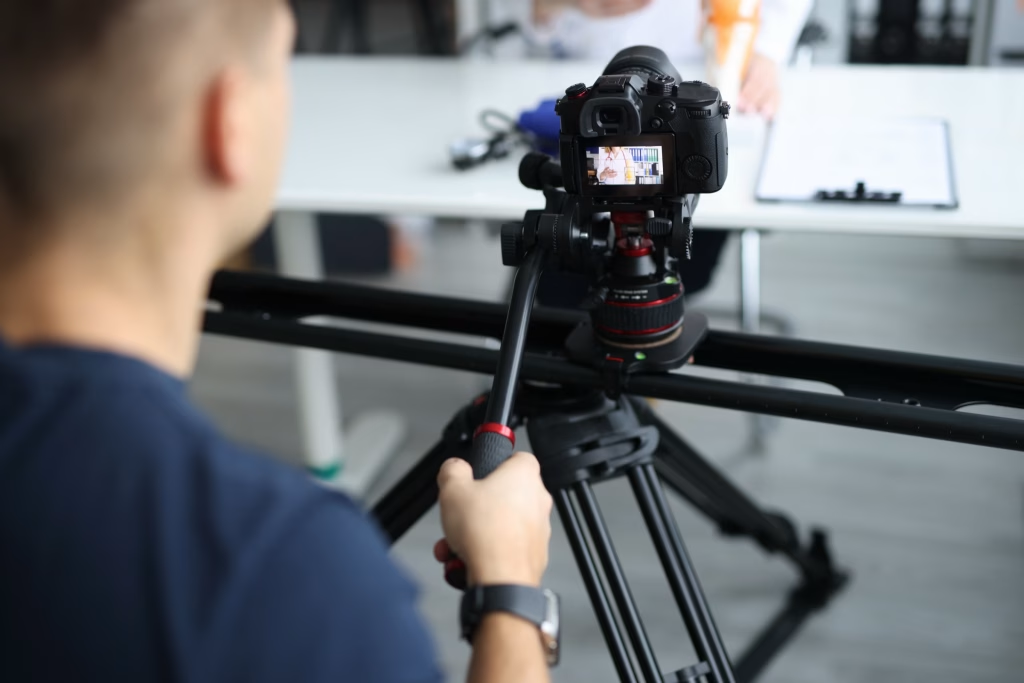
Photography and video that show the real practice
- Built for medical practices
- Compliance-first approach
- Clear monthly reporting
The Medical Marketers
How real imagery grows your practice

Patients want to see who they will meet
Imagery that stays within the rules
Who it is for
When professional photography is worth it
Real photos of your team and rooms build trust faster than almost anything else on a website. A shoot is usually worth doing if:
- Your site uses stock images that could be any practice anywhere.
- You have new practitioners, a new fit-out or a new location.
- Your Google profile and social channels have few or outdated images.
- Patients are nervous about visiting, and seeing the place and the people would help.
We plan shoots so you get images that work across your website, Google profile, social channels and print for a long time.
what you get
What is included in our photography and video service?
Planning and shot list
We plan each shoot around where the imagery will be used, then build a shot list that covers your website, practitioner profiles, Google Business Profile and social media. Planning ahead means the day runs smoothly with minimal disruption to patients, and you finish with the images you actually need.
This includes:
- Reviewing where images are needed and in what formats
- Writing a shot list for each area and person
- Scheduling the shoot around appointments and team rosters
- Planning around patient privacy and consent
You review the shot list and make changes before the shoot day.
Team portraits
We photograph natural, consistent portraits of every practitioner and team member, suitable for profiles, directories and referrer materials. Patients and referrers like to see who they will be dealing with, and a matching set of portraits gives your practice a consistent, professional look wherever your team appears.
This includes:
- Individual portraits of each practitioner and team member
- Consistent background, lighting and framing across the set
- Relaxed direction so people look like themselves
- Crops suited to profiles, directories and print
A consistent style also makes it easier to add new team members later.
Practice and environment
We capture photos of your building, reception, waiting and treatment areas, and the details that make your practice feel welcoming. Seeing the space before they arrive helps patients know what to expect and where they are going before a first visit.
This includes:
- Exterior shots of your building, entrance and signage
- Reception and waiting areas from a patient’s point of view
- Treatment rooms photographed cleanly and accurately
- Detail shots that show the character of your practice
The images are prepared for your website, Google Business Profile and social media.
Video
We produce short, compliant videos such as practitioner introductions, practice tours and what-to-expect explainers for your website and social media. Video lets patients hear from your practitioners and see your practice before their first visit, which can help patients feel prepared before booking.
This includes:
- Planning and scripting each video with you
- Filming practitioner introductions and practice tours
- Explainers that describe what happens at a visit
- Editing and formatting for your website and social platforms
- Checking scripts and edits against the advertising rules
You review each video before it is published.
Why it works
What makes our practice photography so effective?
Real, not stock
Every image shows your actual practice, which builds familiarity and trust.
Consent handled
We manage consent forms for staff and anyone else who appears.
Built for every channel
We deliver images sized and formatted for your website, profiles and social media.
How it works
How a shoot runs
- Week 1: plan. We agree what you need, draw up a shot list and choose a date that suits your clinic.
- Shoot day: capture. We photograph and film your team and rooms with minimal disruption to patients and staff.
- Weeks 2 to 3: edit. We select, edit and prepare images and video for the web, social and print.
- Week 4: deliver. You receive organised files with usage notes, and we help get them onto your website and Google profile.
Timings depend on the size of the practice and the number of people involved, and we confirm them in your scope.
Reporting
What you will receive
- Edited photography. Team portraits, rooms and environment shots, ready for the web and print.
- Short video. A practice introduction or practitioner clip, if included in your scope.
- Social-ready crops. Versions sized for your website, Google profile and social channels.
- Usage notes. What the images can be used for, including consent and licensing where relevant.
We also advise on what to avoid, such as images that could be read as outcome claims.
How we measure it
The numbers we track after a shoot
Time on page
Profile views
Channels used
Compliance
Photography under the advertising rules
Images are advertising too. Our shoots follow these rules:
- Before-and-after photos taken in matching lighting, angle and pose, with consent and no retouching.
- No heavily filtered or altered images that overstate what a treatment can do.
- No patients in shots without clear, written consent, and no patient stories or testimonials on camera.
- Nothing that names or shows prescription-only treatments in promotional content.
Team and room images are low risk, which is part of why they work so well for health practices.
FAQ
FAQs about practice photography and video
Only with care. Patients can appear with documented, informed consent that clearly covers how and where the images will be used, such as your website, social media or printed material. Consent should be voluntary, specific and easy to withdraw, and patients should never feel that their care depends on saying yes.
We avoid anything that implies an outcome or could identify a patient’s health condition. A photo of a patient in a treatment room, for instance, can reveal health information about them, and images that suggest a result can create unreasonable expectations of benefit under the advertising rules. The rules are stricter again for cosmetic procedures, so we stay well clear of any results-style imagery.
For treatment scenes, we usually recommend using staff or consenting models, which gives you natural, realistic images without the privacy risk. We’ll talk through the shot list with you beforehand and flag anything that needs extra thought. We are not lawyers, so for complex consent questions your indemnity insurer or a health lawyer can advise.
No. Videos in which patients talk about their clinical experience or results are testimonials, which can’t be used in advertising a regulated health service under the National Law. That applies whether the video appears on your website, social media or anywhere else you promote your practice, and it applies even when the patient is genuinely happy and keen to help.
Practitioner introductions, practice tours and educational explainers are effective, compliant alternatives. They let prospective patients see who they will meet, what your rooms look like and how you approach care, which answers many of the same questions a testimonial would, without the compliance risk.
- Practitioner introductions in their own words
- A walk-through of your practice and facilities
- Short explainers on what to expect at an appointment
- Answers to common practical questions
We plan and film these with you, and check the final cut against the advertising rules before anything is published.
Most practice shoots take half a day to a full day, depending on the number of practitioners and locations. A single-site practice with a small team sits at the shorter end, while multiple practitioners, several rooms or more than one location push it towards a full day.
We schedule around your clinic so disruption is minimal. That usually means agreeing a run sheet in advance, booking each practitioner into a set time for portraits, and photographing rooms and equipment while they are free. Shooting before opening, after hours or during a quieter session often works well, and it also helps protect patient privacy.
Before the day, we confirm the shot list with you, so everyone knows what will be photographed and who needs to be there. If you’d also like video, such as practitioner introductions or a practice tour, we’ll factor that into the schedule, as filming generally takes a little longer than stills. We confirm the expected timing in your proposal.
Your practice receives a licence to use the images across your marketing. We’ll confirm the exact terms in your proposal before the shoot, so you know what you can do with the photos and video before any work begins.
Licence terms usually set out where you can use the images, such as your website, social media, printed material and advertising, and whether any limits apply, for example to passing them on to third parties like a directory or publisher. If you have particular plans, such as using images on signage or sharing them with a hospital you work with, tell us early so the terms reflect that.
Separate from the licence, there is consent. Staff, practitioners and anyone else who appears in the images need to agree to how they are used, and that consent should be recorded. If someone leaves your practice, it is worth reviewing the images that feature them. We’ll help you keep track of both the licence terms and the consents.
Stock is fine for background visuals, but patients choose practices they can picture themselves visiting. Real images of your own team and rooms are more convincing and help your website stand apart from the many practices using similar stock photos.
When someone is deciding where to book, seeing the actual practitioner they will meet, the reception area they will walk into and the rooms where they will be seen can make the decision feel easier. Stock images can’t do that, and generic medical imagery can look impersonal or out of step with how your practice really feels.
There is a compliance angle too. Stock images showing idealised bodies or implied results can create unreasonable expectations, and models presented as your own patients or staff could be misleading. A sensible mix usually works: your own photos for practitioners, premises and anything that represents your practice, with carefully chosen stock for abstract or decorative uses. We can help you decide where each fits.
We send a short checklist: tidy the rooms, confirm who will be photographed and what to wear, and let patients know a shoot is happening. Staff are asked for consent before they are photographed. A little preparation helps the day run smoothly and keeps the images looking natural.
- Clear clutter, personal items and paperwork from rooms
- Remove or cover patient records and screens
- Confirm who will be photographed and when
- Agree on clothing, such as uniforms or smart casual
- Let patients know they may see a photographer
Pay particular attention to anything that could show patient information, such as appointment screens, files, labels or whiteboards, because it can easily end up in the background of a shot. We’ll check for this on the day too. It also helps to tell us about any rooms or equipment you especially want featured, and anyone who would prefer not to appear, so we can plan around them.
Whenever your team, rooms or services change in a meaningful way, and roughly every couple of years so the images still look like your practice. The goal is simple: when a patient walks in, it should match what they saw online.
Common reasons to update sooner include a new practitioner joining, someone leaving, a fit-out or move, new equipment or a new service. Outdated images can quietly undermine trust, and showing a practitioner who no longer works with you, or rooms that have changed, may also mislead patients about who and what they will find. Practitioner profiles are usually the first to need updating, because they change most often.
You don’t always need a full shoot. A short session to add a new team member’s portrait or a refurbished room can keep things current between larger refreshes. It also helps to keep a simple list of which images appear where on your website and social accounts, so it is clear what needs replacing when something changes.
Yes. We can plan shorter regular shoots to keep a supply of fresh images, which suits practices that post often on social media or update their website regularly.
Regular sessions are usually planned around a content calendar, so each shoot captures what you will actually need over the coming period: seasonal health topics, new services, team news or practice updates. Because they are shorter and focused, they tend to cause less disruption than one large shoot, and they help your feed feel current rather than recycling the same few images.
The same rules apply every time. Anyone who appears needs to consent, patient information stays out of shot, and the content is checked against the advertising rules before it is published. We’ll agree with you how often shoots happen and what each one covers, so the arrangement suits the way your practice markets itself. If your needs change, the schedule can change too, and we’ll review it with you along the way.
You will typically receive team portraits, the premises, consulting rooms without patients, equipment and relaxed behind-the-scenes images. Together they give you a flexible library for your website, practitioner profiles, social media and printed material.
- Individual and group portraits of your team
- Exterior, entrance, reception and waiting areas
- Consulting and treatment rooms without patients
- Equipment and details that show how you work
- Relaxed behind-the-scenes images of the team
We agree the shot list with you before the day, so it reflects the pages and channels you need images for. Portraits are usually shot in a consistent style so profiles look like a set, and we capture a mix of landscape and portrait orientations to suit different layouts. If there is something specific you need, such as a new treatment room or accessibility features like parking and ramps, let us know and we’ll add it to the plan.
Yes. Short introductions and practice tours work well for both. Video helps prospective patients get a feel for your practice and the people they will meet before they book, which can make that first appointment feel less daunting.
Practitioner introductions let each clinician explain, in their own words, who they see and how they approach care. Practice tours show the entrance, reception and rooms, which is particularly helpful for anxious patients or anyone with accessibility needs. Short educational explainers, such as what to expect at an appointment, can also work well, provided they stay factual and balanced.
We plan each video so it can be used in more than one place, for example a longer version for your website and shorter cuts for social media. All video follows the same rules as your other advertising: no patient testimonials, no outcome claims and nothing that could create unreasonable expectations. We’ll talk through which videos suit your practice and agree the scope before filming.
We shoot outside patient hours or in unoccupied rooms, and anything involving patients needs written consent. Protecting patient privacy is the starting point for planning any practice shoot, not an afterthought.
Beyond timing, we check each setup for things that could identify a patient or reveal health information: names on screens, appointment lists, files, labels, whiteboards and reflections. Patients in the waiting room or car park shouldn’t appear in shots, even in the background. If part of a shoot has to happen during clinic hours, we work in a closed-off area and coordinate with reception so patients aren’t caught off guard.
Your practice has obligations under the Privacy Act and the Australian Privacy Principles, and images can be personal information. Where a patient does agree to appear, the consent should be written, specific about how the images will be used and kept on file. We review images before delivery and leave out any that raise a concern. For complex questions, your indemnity insurer or a health lawyer can advise.
Yes. We deliver web-optimised files and crops for your website and social accounts, so your team can use the images straight away without resizing or editing them.
Web-optimised files are compressed to load quickly without visibly losing quality. That matters because large images slow your site down, and page speed affects both the patient experience and how your site performs in search. Crops are prepared for the shapes each platform tends to use, such as wide banners, square posts and portrait formats, so faces and key details aren’t cut off awkwardly.
If print use has been agreed in your proposal, such as brochures or signage, we can also supply high-resolution versions suited to it. Files are organised and named clearly so your team or web developer can find what they need, and descriptive file names and alt text help with accessibility and search. If you work with another agency, developer or printer, let us know their requirements and we’ll prepare files to suit.