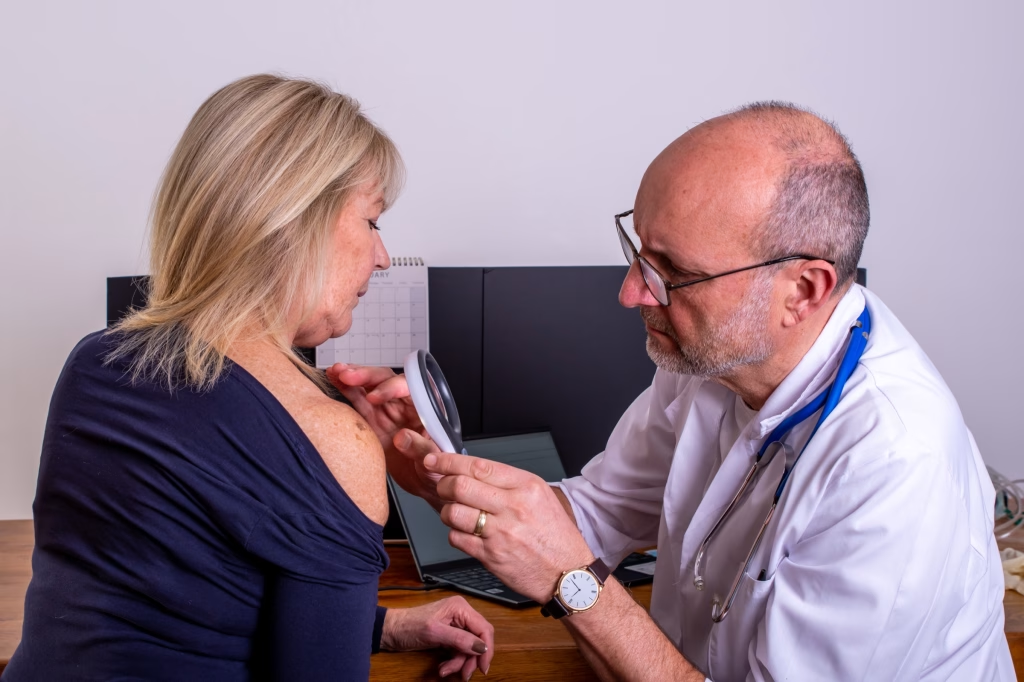
Why skin cancer clinic marketing is different
Australia has one of the highest rates of skin cancer in the world, and skin checks are one of the most searched health services in the country. Demand rises every spring and summer, and people mostly search close to home. Clinics that show up first, explain the process clearly and make booking easy win most of those appointments.
It’s also an area where marketing can easily tip into fear. We keep it calm and factual. Patients get clear information about what a skin check involves, who performs it and what it costs, and recalls bring them back when their practitioner recommends, which keeps your books steady well beyond the summer peak.
Patient journey
How patients choose a skin cancer clinic
Most people don’t book a skin check because of an ad. They book because of a spot, a reminder or a family history, and then they search.
- Step 01
A spot, a reminder or family history
Few people book because of an ad. Something specific makes them act.
Our partWe make sure your clinic appears when people search for a skin check nearby.
- Step 02
They search nearby
They look for a clinic close to home or work with appointments available.
Our partWe keep your listings, hours and booking availability accurate.
- Step 03
They check who will examine them
They want to know who the doctors are and what services are offered on site.
Our partWe present doctors' qualifications accurately and explain each service clearly.
- Step 04
They book and follow through
They read how the process works, including what happens if something needs follow-up.
Our partWe add calm process information and easy booking, with no fear-based wording.
Clear, calm information performs better than alarm, and it is also what the advertising rules expect.
What we bring
What we do for skin cancer clinics
Google Business Profile & Local SEO
Most skin check searches are local.
Learn moreClinic Websites & Conversion Optimisation
Clear service pages and fast booking.
Learn morePatient Email & Recall Marketing
Recall reminders when checks are due.
Learn moreAHPRA-Compliant Content & Copywriting
Accurate, non-alarmist patient information.
Learn morePriorities
Where we focus first for skin cancer clinics
- 01
Seasonal planning
Demand rises in spring and summer, so we plan content, listings and capacity ahead of the peak.
- 02
Clear service pages
Pages for skin checks, mole checks and treatment that explain what happens, how long it takes and how to book.
- 03
Accurate doctor profiles
Titles and experience described accurately, without implying specialist status for GPs.
- 04
Easy booking
Online booking and clear wait information, so interest turns into appointments.
We also set up recall reminders, since regular checks make up much of a clinic’s repeat work.
How we start
What the first 90 days look like
- 1Weeks 1 to 2
Audit
We review your Google profile, website, booking path and how nearby clinics present themselves.
- 2Weeks 3 to 4
Fix the basics
We correct listings, clarify doctor titles and make booking easy to find.
- 3Weeks 5 to 8
Build visibility
We publish service pages and start a review process, ahead of your busy season.
- 4Weeks 9 to 12
Review and extend
We review calls and bookings and set up recall for returning patients.
Because demand is seasonal, we plan the year backwards from your peak.
Compliance
Titles, claims and fear in skin cancer marketing
The rules that apply
Describing practitioners as skin cancer specialists without specialist registration, or using fear to drive bookings, are common problems. Our audit finds them before a complaint does.
- The National Law advertising rules
- Advertising can't be false or misleading, use testimonials, create unreasonable expectations of benefit, offer gifts or discounts without clear terms, or encourage unnecessary use of services.
- Specialist titles
- Skin cancer specialist can mislead unless the practitioner holds the relevant specialist registration.
- No fear-based advertising
- Wording that suggests people risk harm unless they book can be seen as encouraging unnecessary use of services.
- Detection claims
- Claims about catching cancer early or detection rates need careful wording and evidence.
- TGA advertising rules
- Primary sunscreens are regulated as medicines, so product claims must match what they are approved for.
Mistakes we often see at skin cancer clinics
These are the ones that cause trouble. Good skin check marketing is calm, factual and easy to act on.
- 1
Fear-based wording
Language that exploits worry about cancer to push bookings can breach the advertising rules.
- 2
Skin cancer specialist titles
The term can mislead unless the practitioner holds the relevant specialist registration.
- 3
Detection and outcome claims
Statements about catching cancer early or guaranteeing detection need careful wording and evidence.
- 4
Reviews and urgency
Clinical comments in reviews, and countdown offers, shouldn’t be republished or used.
How we help
Most practices start with an audit to find and fix what is already published, then keep new content right with compliant writing and team training.
Compliance audit
We review your website, ads, profiles and social channels, then give you a prioritised list of fixes with replacement wording.
Learn moreAHPRA-compliant content
New pages, posts and ads written within the advertising rules from the first draft.
Learn moreCompliance training
Practical sessions so your team can check their own posts, ads and replies to reviews.
Learn moreTGA advertising compliance
Checks for treatments, medicines, devices and products that fall under the TGA advertising rules.
Learn moreFAQ
FAQs about skin cancer clinic marketing
Not unless they hold specialist registration. GPs with extra training in skin cancer medicine can describe that training and their special interest accurately, but specialist implies registration that, in this field, belongs to dermatologists. We write profiles that highlight real qualifications without overstating them.
A month or two before demand climbs. Search rankings take time to build, and it’s much easier to update your website, Google Business Profile and ads during quieter weeks. We also set up recalls so existing patients book ahead.
Gentle, factual reminders are fine, but fear-based or high-pressure messaging can breach the rule against encouraging unnecessary use of health services. Clear information about who should consider a skin check, and why, tends to work better anyway.
Through helpful, factual content about when checks make sense and what to expect, and by being easy to find when people search. We avoid fear-based messages, which are both unhelpful and risky.
You can describe the services you offer and how they work, as long as claims are accurate and not overstated. We avoid implying that any tool guarantees detection.
A clear, accurate price is fine. Pressure tactics and countdown offers are not. We keep promotions factual and low-key.
Each location gets its own page and Google profile, with accurate doctors, hours and booking, and reporting by site.